
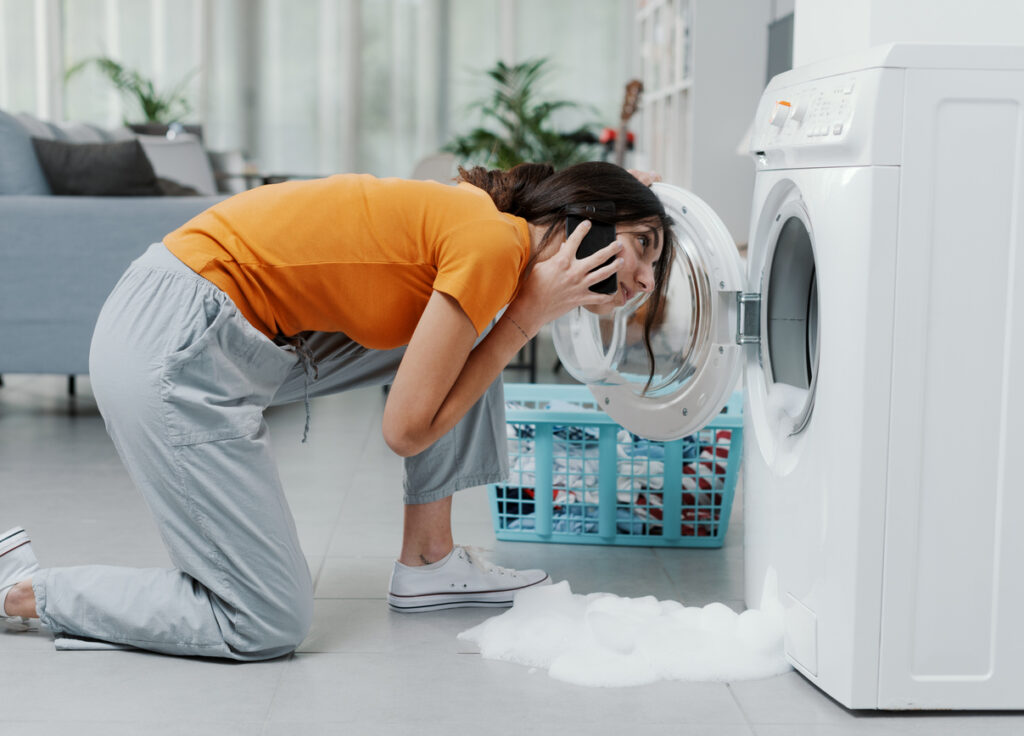
A washing machine leaking water can quickly turn into a serious problem. Puddles on the floor, damp laundry rooms, and water damage are all signs that something isn’t right.
Some washer leaks are easy to address, while others require professional repair. Knowing what to do right away can help prevent further damage to your home.
Common Signs of a Washer Leak
You may be dealing with a washer leak if you notice:
-
Water pooling around the washer
-
Damp floors or cabinets nearby
-
Drips or puddles during or after a cycle
-
A musty smell from trapped moisture
If you see any of these signs, identifying the source of the leak is the first step.
Check the Water Supply Hoses
Loose or damaged water supply hoses are one of the most common causes of washer leaks.
What you can check:
-
Make sure the hoses are tightly connected
-
Look for cracks, bulges, or wear
-
Replace old rubber hoses with braided stainless steel hoses
Even a small hose leak can cause significant water damage over time.
Inspect the Drain Hose
The drain hose carries water out of the washer during the drain cycle. If it’s loose, cracked, or improperly positioned, water can leak onto the floor.
What to look for:
-
Cracks or holes in the hose
-
A loose connection at the standpipe
-
The hose slipping out during draining
Securing or replacing the drain hose may solve the issue.
Check the Door Seal or Lid Gasket
Front-load washers are especially prone to leaks caused by worn or damaged door seals. Debris, mold, or small tears can allow water to escape during cycles.
What you can do:
-
Clean the door seal thoroughly
-
Check for visible tears or gaps
-
Avoid overloading the washer
If the seal is damaged, replacement is often necessary.
Overloading or Excess Detergent
Using too much detergent or overloading the washer can create excess suds, which may cause water to overflow.
What to try:
-
Use the recommended detergent amount
-
Avoid packing clothes too tightly
-
Run a rinse cycle to clear excess suds
High-efficiency washers require HE detergent to prevent leaks and oversudsing.
Faulty Internal Components
Leaks can also be caused by internal parts such as the pump, tub seal, or valves. These issues often require professional repair.
Warning signs include:
-
Water leaking from underneath the washer
-
Loud noises during operation
-
Leaks that continue despite hose checks
Internal repairs should be handled by an experienced technician.
When to Call a Local Appliance Repair Technician
If the leak continues after basic checks, it’s best to stop using the washer. Continued operation can lead to water damage, mold growth, and more costly repairs.
You should call a professional if:
-
The source of the leak isn’t obvious
-
Water is leaking from underneath the washer
-
The problem keeps coming back
Get Washer Repair Help Near You
A leaking washer should be addressed quickly to avoid damage to your home.
Fix Home Appliances helps connect homeowners with experienced local washer repair technicians who can diagnose the problem and provide the right solution.
👉 Get a Free Appliance Repair Estimate